Rebox

Updated: Feb 5, 2025
Sustainable package management
Through the integration of a reusable physical box and a digital tracking service, we designed a system to enhance traceability, reduce environmental impact, and improve user experiences in logistics. The project stands as a testament to how user-centered design and universal design principles can create meaningful, sustainable solutions.

My role and contributions
In the Rebox project, I played a key role in designing the user interface, shaping the visual identity, and ensuring accessibility in the final prototype. I also contributed to user research, data analysis, and concept development, applying a user-centered approach throughout the process.
Process and UX Methods
Our UX work followed a structured and iterative process designed to deeply engage end-users and stakeholders. Below are the key stages and methods we utilized:
User research and concept development
We identified the critical issues surrounding single-use packaging, lack of traceability, and user dissatisfaction with existing logistics systems. This was supported by market research and an analysis of previous empirical studies, ensuring a well-informed foundation for the project.
Conducted a Future Workshop with users to identify key pain points in package delivery.
Led semi-structured interviews with logistics and warehouse personnel to gather insights into operational challenges.
Insights from interviews and workshops were analyzed using thematic methods to identify user needs. Based on the data we created personas, user scenarios and key requirements.
UX and UI Design
Wireframes and interactive prototypes: Low- and high-fidelity prototypes of the app and the physical box were created to visualize the design.
User testing: Prototypes were tested with users, focusing on usability, functionality, and user satisfaction. Feedback guided iterative improvements, refining the product to better meet user needs.
Developed the visual identity, including logo, typography, color scheme, and other UI components.
Ensured accessibility by testing contrast ratios and optimizing readability.
User testing and iteration
Conducted usability tests on the prototype, refining the design based on user feedback.
Prioritized key features such as real-time package tracking, messaging functionality, and sustainability impact statistics.
Prototypes were tested with users, focusing on usability, functionality, and user satisfaction. Feedback guided iterative improvements, refining the product to better meet user needs.
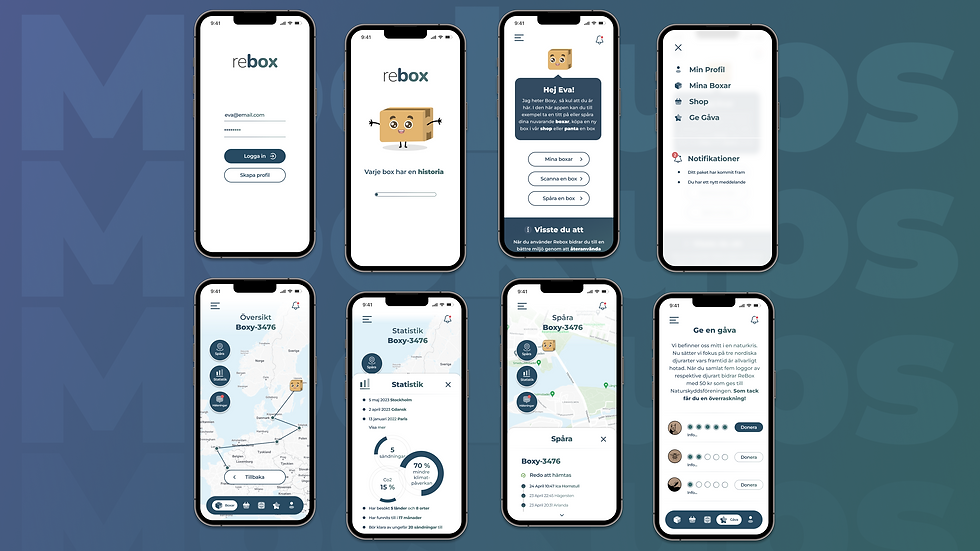
Final prototype
Key takeaways from this project
I learned valuable lessons about team collaboration, prioritization, and the nuances of user-centered design.
Team dynamics
Working with a well-established group allowed us to build on trust and efficient communication. However, this experience highlighted the importance of assigning clear leadership roles, such as a project manager, to maintain cohesion in remote collaborations.
Scope management
As designers, it's tempting to pursue all ideas. This project taught me the importance of scaling down and prioritizing essential features, especially when time and resources are limited.
Refining research techniques
While the Future Workshop provided creative insights, it underscored the need for clarity in objectives to ensure actionable outcomes. Conversely, the individual interviews were particularly effective in generating usable data, reaffirming their value in our process.
Focus on accessibility
My passion for visual design and accessibility played a significant role in shaping the app’s user interface. I ensured that the design adhered to inclusive principles, such as testing color contrasts and readability, to create a product usable for individuals with diverse needs.
Balancing creativity with feasibility
I realized the importance of involving senior industry professionals to validate ideas against practical constraints - a step we could have improved upon.
In retrospect, this project reinforced my belief in the power of user-centered design to address complex challenges like sustainability. It also solidified my skills in balancing creativity with practical problem-solving, which I am eager to apply in future endeavors.

Comments